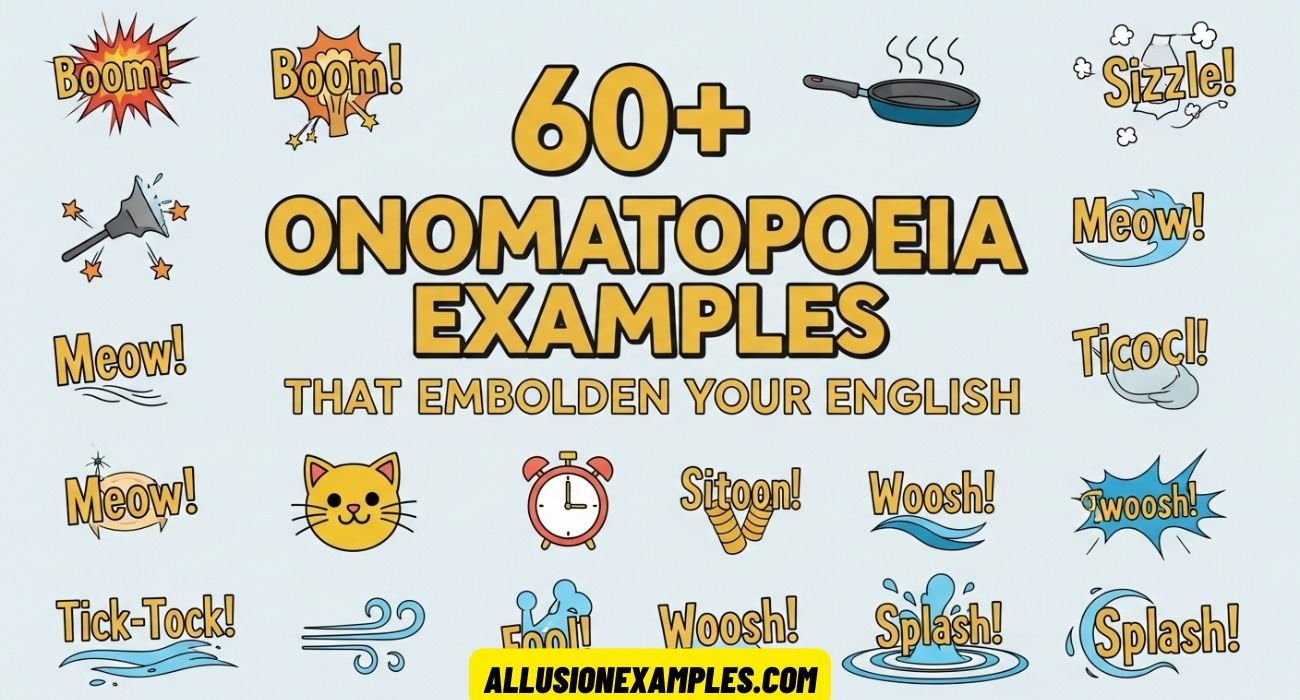
60+ Onomatopoeia Examples That Embolden Your English
Onomatopoeia Examples are words that copy real-life sounds. These words help readers hear sounds in their minds. Words like buzz, crash, and splash are common Onomatopoeia Examples.
Onomatopoeia Examples make English fun and exciting to learn. They help stories sound more real and interesting. These sound words also make reading easier and more enjoyable.
You can find Onomatopoeia Examples in books, movies, and daily conversations. Writers use them to describe sounds quickly and clearly. Learning these words improves vocabulary and writing skills.
What Is Onomatopoeia? (Understanding Sound Words in English)
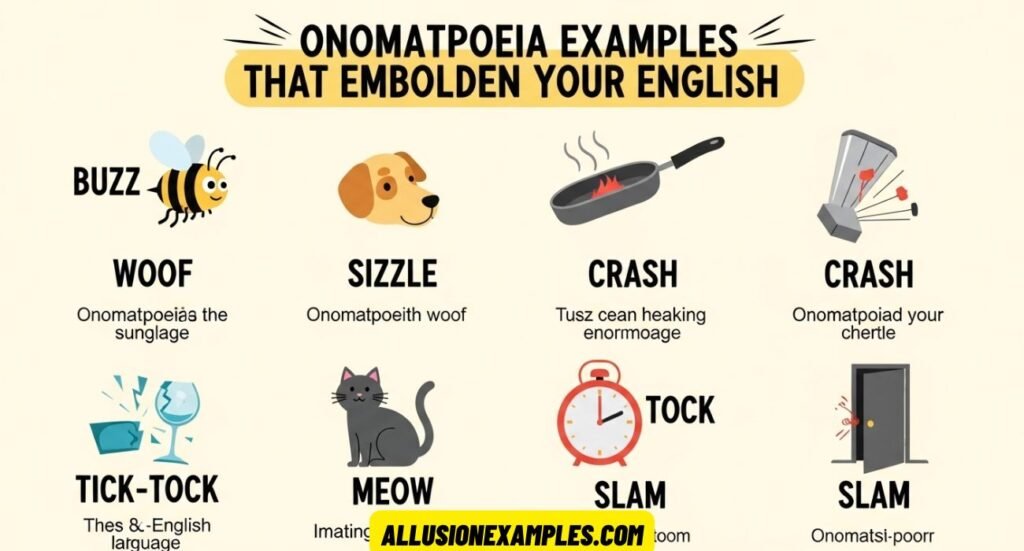
To fully understand 60 Onomatopoeia Examples That Embolden Your English, you first need to understand what is onomatopoeia. The onomatopoeia definition describes words that imitate natural sounds. These sound descriptive words are commonly used in conversations and storytelling.
For example, words like buzz, crash, bang, and splash are popular English sound vocabulary used every day. These figurative language examples help create clear sound images in the reader’s mind. Writers often use auditory imagery words to create stronger emotional connections with readers.
These sound effect words are also important for learners because they improve fluency. When someone hears these noise words in English, they quickly understand what is happening.
Here is a simple table explaining common sound words list examples:
| Word | Sound Meaning | Example Sentence | |
| Boom | Explosion | The fireworks went boom | |
| Buzz | Bee sound | The bee buzzed loudly | |
| Splash | Water sound | The kid made a splash | |
| Crack | Breaking sound | The branch cracked | |
| Bang | Loud hit | The door banged shut |
These descriptive sound words are very common in American English and help improve communication.
Where Are Onomatopoeia Examples Commonly Used?
Understanding where 60 Onomatopoeia Examples That Embolden Your English are used helps learners apply them correctly. These English vocabulary sound words appear in many areas including books, movies, and conversations.
In everyday communication, onomatopoeia in everyday speech is very common. Americans often use everyday sound words when telling stories. For example, someone might say the phone went beep or the car went vroom.
In children’s learning, onomatopoeia for kids plays a major role. These sound descriptive words make learning English fun and easy. Children often learn animal sound words, vehicle sound words, and household sound words early.
In entertainment, sound effect words appear in comics and movies. These movement sound words and impact sound words create excitement and visual imagination.
Onomatopoeia Examples in Literature
Writers often use onomatopoeia in literature to create emotional depth. These examples of figurative language improve storytelling and create immersive experiences.
In onomatopoeia in poetry, authors use auditory imagery examples to create rhythm and sound patterns. Many American poets use sound imitation words to create musical effects.
In novels, writers use literary devices examples like onomatopoeia in writing to make scenes realistic. For example, describing rain as pitter-patter helps readers imagine the sound.
Children’s books also rely heavily on onomatopoeia words. These animal sound vocabulary examples make stories engaging and easier to understand.
Onomatopoeia Examples in Media and Advertising
Advertising frequently uses sound effect words to create memorable campaigns. Food advertisements often include cooking sound words like sizzle or eating sound words like crunch.
Movies and television use action sound effects and explosion sound words to build excitement. Comic books use hitting sound words and movement sound words to show action scenes.
Brands also use vehicle sound words like vroom to advertise cars. These machine sound words create strong emotional connections with audiences.
Onomatopoeia Examples in Academic and Creative Writing
Creative writing uses onomatopoeia in writing to create vivid descriptions. Writers often use sensory language examples to make scenes realistic.
In descriptive essays, nature sound words like rustle or weather sound words like rumble create atmosphere. These water sound words also help describe environments effectively.
Poets often use wind sound vocabulary and thunder sound words to create mood and tone.
60+ Fun Onomatopoeia Examples with Meanings
Learning 60 Onomatopoeia Examples That Embolden Your English improves vocabulary and fluency. Below are categorized examples.
Animal Sound Onomatopoeia Examples
These animal sound words help learners understand animal noises in English and build animal sound vocabulary.
| Word | Meaning |
| Meow | Cat sound |
| Woof | Dog bark |
| Moo | Cow sound |
| Chirp | Bird sound |
| Roar | Lion sound |
| Quack | Duck sound |
| Oink | Pig sound |
| Buzz | Bee sound |
| Hiss | Snake sound |
| Neigh | Horse sound |
| Croak | Frog sound |
| Squeak | Mouse sound |
These include dog sound words, bird sound words, and cat sound words commonly used in English.
Nature Sound Onomatopoeia Examples
These nature sound words represent environmental sounds.
| Word | Meaning |
| Boom | Thunder |
| Rustle | Leaves |
| Splash | Water |
| Drip | Water drops |
| Crackle | Fire |
| Whoosh | Wind |
| Swish | Air movement |
| Gurgle | Water bubbling |
| Rumble | Thunder |
| Pitter-patter | Rain |
| Whisper | Wind |
| Plop | Water drop |
These include weather sound words, water sound words, wind sound vocabulary, and thunder sound words.
Impact and Action Onomatopoeia Examples
These impact sound words and action sound effects describe movement.
| Word | Meaning |
| Bang | Loud hit |
| Crash | Collision |
| Thud | Heavy fall |
| Clang | Metal hit |
| Wham | Impact |
| Splat | Wet impact |
| Kaboom | Explosion |
| Zoom | Fast movement |
| Snap | Breaking |
| Slam | Door closing |
| Crack | Breaking |
| Pop | Burst |
These include explosion sound words, hitting sound words, and movement sound words.
Food and Eating Onomatopoeia Examples
These food sound words represent eating and cooking sounds.
| Word | Meaning |
| Crunch | Hard bite |
| Munch | Eating |
| Slurp | Drinking |
| Gulp | Swallow |
| Sizzle | Cooking |
| Fizz | Soda |
| Pop | Popcorn |
| Glug | Drinking |
| Chomp | Bite |
| Chew | Eating |
| Smack | Lip sound |
| Nom | Eating |
These include eating sound words, cooking sound words, and drinking sound words.
Everyday Life Onomatopoeia Examples
These everyday sound words describe daily life.
| Word | Meaning |
| Tick-tock | Clock |
| Ring | Phone |
| Click | Mouse |
| Beep | Machine |
| Ding | Bell |
| Vroom | Car |
| Clank | Metal |
| Buzz | Phone |
| Knock | Door |
| Creak | Door |
| Whirr | Machine |
| Honk | Car |
These include machine sound words, vehicle sound words, and household sound words.
How to Practice Using Onomatopoeia Examples Correctly
To master 60 Onomatopoeia Examples That Embolden Your English, learners should read books, watch movies, and listen to conversations. Reading children’s books helps understand onomatopoeia for kids. Watching movies improves understanding of sound effect words. Writing short stories improves onomatopoeia in writing.
Situations Where You Would Use Onomatopoeia Examples
You can use onomatopoeia in everyday speech while telling stories. Creative writing uses sound descriptive words to improve engagement. Advertising uses sound effect words to attract attention. Teachers use onomatopoeia words to help students learn faster
Appropriate Uses of Onomatopoeia
Onomatopoeia in literature, storytelling, marketing, and informal writing are effective uses. These figurative language examples create engaging experiences. Writers use auditory imagery words to strengthen communication.
Inappropriate Uses of Onomatopoeia
Avoid using onomatopoeia words in academic research papers and professional documents. These situations require formal language instead of sound imitation words.
See Also : 70 Powerful Examples of Personification with Explanations (Complete Guide
What Is Onomatopoeia and Why It Matters in English
Understanding what is onomatopoeia helps learners improve communication skills quickly. The onomatopoeia definition refers to words that imitate sounds found in real life. These sound words in English make conversations more expressive and natural. Writers often use onomatopoeia in English to create engaging content that captures attention and improves storytelling.
Learning onomatopoeia meaning and examples also helps develop English sound vocabulary and improve pronunciation. These sound descriptive words are useful in conversations, storytelling, and creative writing. Many teachers introduce onomatopoeia for kids early because it makes learning fun. These sensory language examples also help readers imagine sounds clearly.
The Role of Onomatopoeia in Everyday Conversations
Using onomatopoeia in everyday speech makes conversations more lively and expressive. People often use noise words in English to describe sounds quickly without long explanations. These examples of sound words help listeners understand situations clearly and create strong auditory imagery examples during conversations.
Many Americans use everyday sound words while telling stories. Words like buzz, crash, and click are common sound effect words used daily. These English vocabulary sound words improve storytelling and communication. Learning these descriptive sound words helps non-native speakers sound more fluent and natural.
Onomatopoeia in Literature and Storytelling
Writers frequently use onomatopoeia in literature to make stories more engaging. These figurative language examples create vivid mental pictures and enhance storytelling. Authors often use auditory imagery words to bring scenes to life. This literary device onomatopoeia is especially useful in novels and short stories.
In storytelling, onomatopoeia in writing helps describe sounds realistically. Writers use sound imitation words to improve emotional impact. These literary devices examples are common in children’s books and novels. Using sensory language examples helps readers feel more connected to the story.
Onomatopoeia in Movies and Entertainment
Movies and television often use sound effect words to create excitement and realism. These action sound effects help audiences imagine events happening on screen. Directors use movement sound words and impact sound words to enhance dramatic scenes and improve viewer engagement.
Animated shows also rely heavily on onomatopoeia words. These sound descriptive words help create humor and excitement. Many American cartoons use explosion sound words and hitting sound words to create entertaining scenes. These auditory imagery examples make entertainment more engaging.
Animal Sound Onomatopoeia in English
Learning animal sound words improves vocabulary and listening skills. These animal noises in English help learners understand everyday conversations. Teachers often introduce animal sound vocabulary early because it improves pronunciation and memory.
Common dog sound words, bird sound words, and cat sound words appear in children’s books. These sound imitation words also help improve storytelling skills. Writers often use these sound descriptive words to create engaging characters and scenes.
Nature Sound Onomatopoeia Examples
Nature sound words help describe environments more effectively. Writers use weather sound words to describe rain, wind, and storms. These water sound words help readers imagine different settings clearly.
Using wind sound vocabulary and thunder sound words helps create strong emotional effects. These auditory imagery examples improve creative writing. Authors use these sensory language examples to build atmosphere and mood.
Impact and Action Sound Words
Impact sound words are commonly used in storytelling and movies. These action sound effects help describe sudden movements and events. Writers often use hitting sound words to create excitement in action scenes.
Explosion sound words and movement sound words also improve storytelling. These sound effect words help readers imagine dramatic moments. Using these descriptive sound words makes writing more engaging.
Food and Eating Sound Words
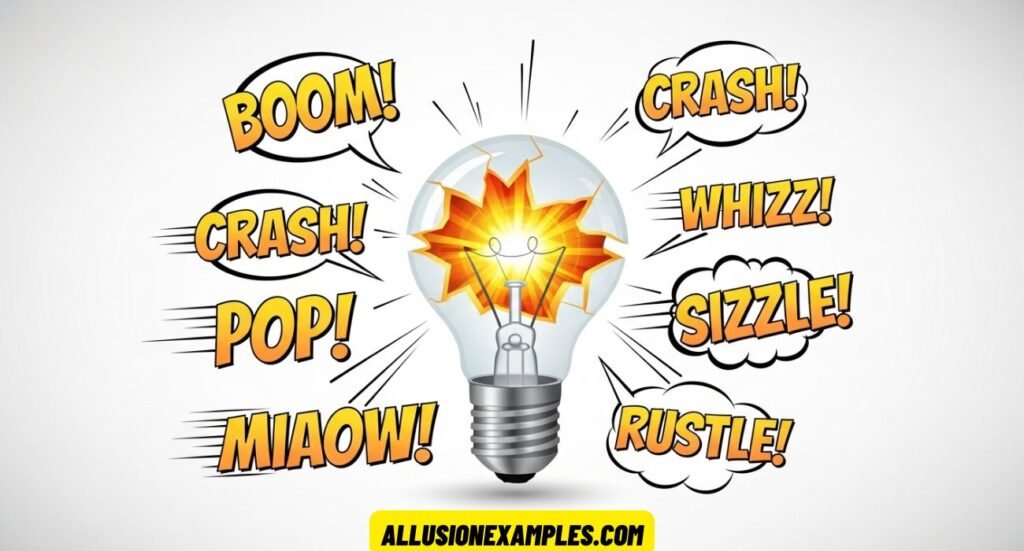
Eating sound words are often used in advertisements and storytelling. These food sound words make descriptions more realistic. Writers frequently use cooking sound words to describe food preparation.
Drinking sound words also appear in conversations and writing. These sound descriptive words help create vivid scenes. Advertisers often use these sound imitation words to make food seem more appealing.
See Also : 70+ Common Symbols in Literature: Unlock Hidden Meanings (Amazing Guide)
Everyday Life Onomatopoeia Words
Everyday sound words help describe daily activities. These machine sound words appear in homes, offices, and public places. Learning these vehicle sound words improves conversational English.
Many household sound words are commonly used in conversations. These sound effect words help describe common situations. Using these English vocabulary sound words improves fluency.
Onomatopoeia in Creative Writing
Onomatopoeia in writing helps writers create engaging stories. These figurative language examples improve storytelling and reader engagement. Authors use auditory imagery words to create realistic scenes.
Using sensory language examples makes writing more interesting. Writers often combine sound imitation words with descriptions. These literary devices examples help create vivid imagery.
Benefits of Learning Onomatopoeia Examples
Learning 60 Onomatopoeia Examples That Embolden Your English improves vocabulary and fluency. These sound words list examples help learners communicate more naturally. Understanding onomatopoeia meaning and examples improves comprehension.
Using English sound vocabulary improves pronunciation and listening skills. These sound descriptive words help learners understand conversations better. Learning these noise words in English also improves confidence.
Tips for Using Onomatopoeia Effectively
Using onomatopoeia words correctly improves communication. Writers should use sound effect words where sound plays an important role. These descriptive sound words help create stronger impact.
Avoid overusing sound imitation words in formal writing. Use onomatopoeia in everyday speech naturally. Learning these auditory imagery examples improves communication skills.
FAQs
What are 5 examples of onomatopoeia?
Five common onomatopoeia words include buzz, bang, splash, crash, and tick-tock.
These sound words in English imitate real sounds and make writing more expressive.
What is the simple definition of onomatopoeia?
The onomatopoeia definition is words that copy or imitate natural sounds.
These sound imitation words help create strong auditory imagery examples.
What’s an onomatopoeia for kids?
An onomatopoeia for kids is a fun word that sounds like a real noise, such as meow or woof.
These animal sound words make learning English easy and enjoyable.
What is an example of a 50 onomatopoeia sentence?
The rain went pitter-patter, thunder boomed, doors slammed, bees buzzed, and popcorn popped loudly.
This sentence uses multiple examples of sound words and onomatopoeia in writing.
Conclusion
Learning Onomatopoeia Examples helps students improve English in a simple and fun way. These sound words make sentences lively and easy to understand. Writers use onomatopoeia to show sounds clearly and create strong images. Students also build better vocabulary with these words. Onomatopoeia Examples like buzz, splash, and boom help readers imagine scenes quickly. These words also support storytelling and creative writing skills.
Students use Onomatopoeia Examples in stories, conversations, and school writing. These words make ideas clear and interesting. Teachers often use them to help children learn faster. Practice with these sound words improves reading and writing skills. Onomatopoeia Examples also build confidence in English communication. Regular practice helps students speak and write naturally. Learning these words supports better English development.