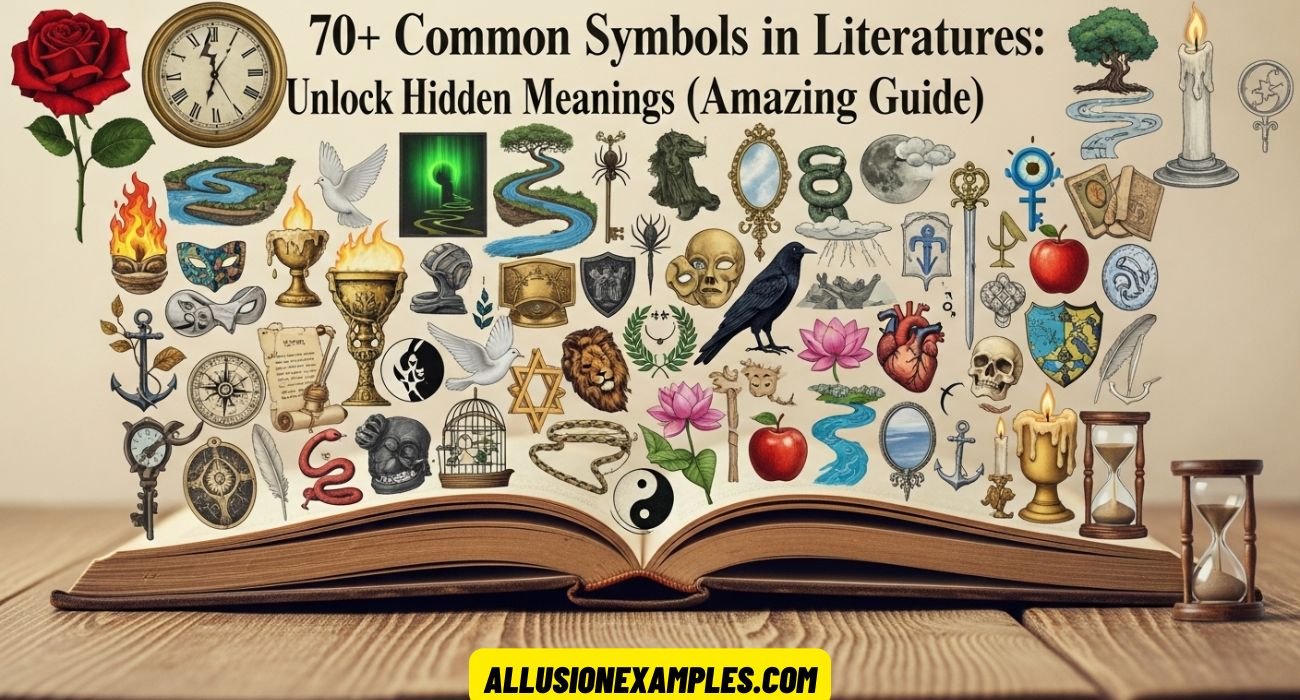
70+ Common Symbols in Literature: Unlock Hidden Meanings (Amazing Guide)
Common Symbols in Literature are objects, colors, animals, or events that show deeper meanings. Writers use them to express ideas without long explanations. These symbols help readers understand themes and emotions in stories.
Rain often appears during sad scenes. A dark road can show a difficult journey. These small details are not random. Writers use Common Symbols in Literature to create hidden meaning.
Common Symbols in Literature appear in novels, poems, and short stories. They help readers connect with characters and themes. Learning these symbols makes reading easier and more meaningful.
What Are Common Symbols in Literature?
Before exploring the full literary symbolism list, it is important to understand the symbolism definition literature. A symbol is an object, character, place, or event that has a literal meaning and also represents a deeper idea.
For example, a rose is just a flower in real life. But in symbolism in fiction, a rose often represents love, beauty, or even pain if it has thorns. This dual meaning creates depth and emotion, which is why symbolism in storytelling is one of the most powerful literary devices used by writers.
Understanding the meaning of symbols in literature also helps readers explore themes in literature more clearly. For example, a storm during a family argument strengthens the theme of conflict. This is why symbolism examples in books often appear during emotional or important moments.
There are different types of symbolism in literature. Universal symbolism includes symbols like light representing hope. Cultural symbolism depends on traditions and beliefs. Contextual symbolism depends on the story itself. These symbolism techniques allow writers to create deeper meaning without long explanations.
Writers also combine imagery in literature, motifs in literature, and allegory in literature with symbolism to create layered storytelling. Understanding metaphor vs symbolism also helps. A metaphor directly compares two things, while symbolism uses objects repeatedly to represent deeper ideas.
Nature and Weather: Common Symbols in Literature
Nature is one of the most powerful sources of common literary symbolism. Authors often use weather and nature to reflect emotions, conflicts, and character development. This technique appears widely in symbolism in English literature and symbolism in fiction writing.
When readers notice weather changes, they are often witnessing symbolism examples. For example, sunshine after a battle often represents hope. Fog during a mystery suggests confusion. These symbolism meanings are easy to understand because they connect to human experience.
Nature symbolism is also common in symbolism examples in novels, symbolism examples in movies, and symbolism in short stories. Writers use these symbolic objects because readers naturally associate emotions with nature.
Weather and Celestial Symbols
Weather and celestial symbols are some of the most common symbolic meaning examples in literature. These symbols appear across cultures and historical periods.
| Symbol | Common Meaning | Example |
| Rain | Sadness, cleansing, rebirth | Character crying in rain |
| Storm | Conflict, chaos | Family argument during storm |
| Fog | Confusion | Detective searching in fog |
| Sun | Hope | Sunrise after victory |
| Moon | Change | Character transformation |
| Stars | Destiny | Lovers looking at stars |
| Snow | Death, purity | Snow covering battlefield |
| Wind | Change | Wind before decision |
| Rainbow | Hope | Rainbow after struggle |
| Lightning | Sudden idea | Lightning during discovery |
These symbolism examples in literature help readers perform deeper literary analysis. Authors rely on these patterns to communicate emotions quickly.
Plant and Landscape Symbols
Plants and landscapes represent growth, struggle, and transformation in symbolism in literature. These symbolic elements in literature often reflect character journeys.
| Symbol | Meaning | Example |
| Forest | Danger or self-discovery | Hero entering forest |
| Garden | Growth | Love blooming in garden |
| Mountain | Challenge | Climbing to achieve goal |
| River | Journey | Crossing river |
| Desert | Isolation | Character searching alone |
| Rose | Love | Giving a rose |
| Tree | Wisdom | Old tree in town |
| Water | Rebirth | Character diving in lake |
| Fire | Passion | House burning |
| Weeds | Neglect | Garden full of weeds |
These symbolism examples for students help understand symbolism interpretation more easily.
Animals: Common Symbols in Literature
Animals are widely used in symbolism in storytelling because they immediately communicate personality traits. These symbolism examples in literature appear in myths, novels, and movies.
| Animal | Meaning |
| Lion | Courage |
| Snake | Betrayal |
| Dove | Peace |
| Crow | Death |
| Owl | Wisdom |
| Lamb | Innocence |
| Wolf | Danger |
| Butterfly | Change |
| Dog | Loyalty |
| Eagle | Freedom |
| Rat | Betrayal |
| Spider | Manipulation |
These symbols are common in symbolism in novels, symbolism in poetry, and symbolism in fiction.
Colors: Common Symbols in Literature
Color symbolism is one of the most powerful literary devices symbolism techniques. Colors communicate emotion instantly.
| Color | Meaning |
| Red | Passion |
| White | Innocence |
| Black | Death |
| Green | Envy |
| Blue | Sadness |
| Yellow | Cowardice |
| Purple | Royalty |
| Gold | Wealth |
| Gray | Depression |
These colors appear in symbolism examples in books and symbolism examples in movies.
Objects and Settings: Common Symbols in Literature
Everyday objects often carry deeper meanings in symbolism in literature.
| Object | Meaning |
| Mirror | Truth |
| Clock | Time |
| Key | Freedom |
| Mask | Deception |
| Road | Journey |
| Window | Escape |
| Door | Opportunity |
| Skull | Death |
| Chain | Imprisonment |
| Ring | Eternity |
| Ladder | Ambition |
| Book | Knowledge |
These symbolism meanings appear frequently in symbolism examples in novels and symbolism in fiction writing.
Why Do Authors Use Common Symbols in Literature?

Authors use common symbols in literature to create emotional depth and hidden meaning. Symbolism in literature allows stories to communicate ideas without long explanations.
Symbols also help connect readers to themes in literature. For example, a broken clock may represent lost time or regret. This technique enhances symbolism in storytelling.
Famous author Ernest Hemingway once said:
“The dignity of movement of an iceberg is due to only one-eighth of it being above water.”
This quote explains symbolism in literature perfectly. Most meaning lies beneath the surface.
How to Identify Common Symbols in Literature
Recognizing common symbols in literature becomes easier with practice. Readers should notice repetition, emphasis, and placement. If an object appears multiple times, it may be a symbol. If weather changes during emotional moments, it likely carries meaning.
Readers should also analyze colors, animals, and objects carefully. These symbolism techniques help readers perform better symbolism analysis in literature.
For example, in symbolism examples in novels like “The Great Gatsby,” the green light represents hope and dreams. This is one of the most famous symbolic meaning examples.
See Also : Personality Adjectives to Describe a Person – With Examples (Complete Guide)
The Power of Symbolism in Literature
Symbolism in literature allows writers to communicate complex emotions and themes without directly explaining them. Instead of long descriptions, authors use objects, colors, or events to represent deeper meanings. This technique makes stories more engaging and encourages readers to think critically about what they read and discover hidden layers within narratives.
Understanding symbolism also improves reading comprehension and literary analysis skills. Readers begin to notice patterns, recurring images, and deeper themes. This awareness transforms reading from passive entertainment into an active exploration. Symbolism in storytelling connects readers emotionally and intellectually, making stories more memorable and meaningful.
Why Authors Use Common Literary Symbols
Authors use common literary symbolism to create universal meaning that readers instantly understand. For example, darkness often represents fear or mystery, while light symbolizes hope. These shared meanings help writers communicate emotions quickly. Readers recognize symbols naturally, which strengthens the story’s impact and emotional depth.
Symbolism also helps connect different themes in literature. A simple object like a road can represent life’s journey. These symbolic elements allow writers to create layered storytelling. Symbolism in fiction gives readers something deeper to explore, making literature more powerful and thought-provoking.
Nature as a Source of Symbolism
Nature symbolism is one of the oldest forms of symbolism in English literature. Writers often use seasons, weather, and landscapes to reflect character emotions. For example, spring represents new beginnings, while winter often symbolizes death or hardship. These connections help readers understand characters without direct explanation.
Nature also plays a role in symbolism examples in novels and stories. Mountains represent challenges, rivers symbolize journeys, and forests often represent uncertainty. These natural symbols appear frequently in literature because they relate to universal human experiences.
Weather Symbolism in Literature
Weather symbolism is commonly used to show emotional states. Rain often symbolizes sadness or emotional release, while storms represent conflict or tension. These symbolism examples in literature help readers understand characters’ feelings without direct dialogue.
Weather changes also signal important plot moments. Sunshine after a struggle often represents hope. Fog suggests confusion or mystery. These symbolism techniques strengthen storytelling and make emotional moments more powerful.
Animal Symbolism in Literature
Animal symbolism is one of the most recognizable forms of symbolic meaning in literature. Lions represent courage, snakes represent betrayal, and doves symbolize peace. These meanings are rooted in history and culture, making them easy for readers to understand.
Writers often use animal symbolism to describe characters quickly. Calling someone a wolf suggests danger or aggression. These symbolism examples in fiction writing help create vivid imagery and deepen characterization.
Color Symbolism and Emotional Meaning
Colors play an important role in symbolism in literature. Red often represents passion or danger, while blue represents sadness or calmness. These symbolic meanings help create mood and tone within stories.
Color symbolism also appears in symbolism examples in books and movies. A character dressed in black may represent mystery or evil. These visual symbols allow writers to communicate ideas without long explanations.
Objects as Literary Symbols
Everyday objects often carry symbolic meaning in literature. A mirror can represent truth or self-reflection, while a key may symbolize freedom or knowledge. These symbolic objects help create deeper meaning in stories.
Writers use object symbolism to highlight character growth. A broken watch might represent lost time or regret. These symbolism examples enhance storytelling and create emotional depth.
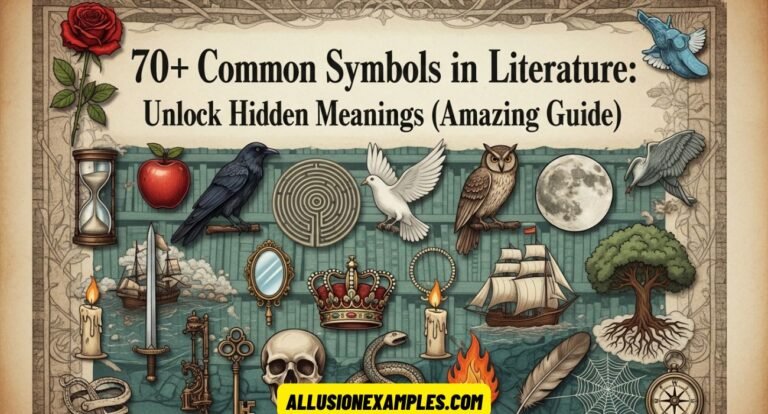
See Also : 70+ Common Symbols in Literature: Unlock Hidden Meanings (Amazing Guide)
Light and Darkness Symbolism
Light and darkness are powerful symbolic elements in literature. Light often represents hope, truth, or goodness. Darkness typically symbolizes fear, mystery, or evil. These contrasts create dramatic tension in storytelling.
Authors frequently use light symbolism during character transformation. A character stepping into sunlight may represent growth or clarity. These symbolism techniques help readers understand emotional change.
Journey as a Symbol in Literature
Journeys often symbolize personal growth and transformation. Characters who travel often face challenges that shape their identity. This symbolic journey is common in novels, stories, and myths.
The journey symbol also reflects life experiences. Roads, paths, and travel represent change and discovery. These symbolism examples in literature highlight character development.
FAQs
What are common literary symbols?
Common literary symbols are objects, colors, characters, or events that represent deeper meanings beyond their literal sense. They are widely used in symbolism in literature to express themes, emotions, and hidden ideas.
What are the 20 examples of symbolism?
Rain (sadness), storm (conflict), sun (hope), moon (change), rose (love), river (journey), forest (danger), fire (passion), water (rebirth), mirror (truth), road (life path), owl (wisdom), snake (betrayal), dove (peace), lion (courage), red (love), black (death), white (purity), clock (time), key (freedom).
What does 10 symbolize in literature?
The number 10 often symbolizes completeness, perfection, or order in symbolic meaning in literature. It also represents totality, harmony, and the completion of a cycle.
What are the 10 examples of symbolism?
Rain (sadness), sun (hope), storm (conflict), rose (love), road (journey), mirror (truth), fire (passion), water (rebirth), snake (betrayal), dove (peace).
Conclusion
Understanding Common Symbols in Literature helps students read stories with deeper meaning. Symbols give extra ideas beyond simple words. A storm can show conflict, and a rose can show love. These symbols appear in novels, poems, and short stories. When students learn symbolism, they understand characters and themes better. This skill also improves reading and writing. Students begin to notice details, colors, and objects more carefully.
Learning Common Symbols in Literature also builds strong literary analysis skills. Students connect symbols with emotions and ideas. This practice makes reading more interesting and meaningful. Writers also use symbols to make stories powerful and memorable. With regular practice, students recognize symbols easily. This knowledge supports academic success and strengthens creative thinking. Understanding symbolism helps students enjoy literature and discover hidden meanings.