Romanticism in English Literature: Key Themes, Poets, and Legacy
Romanticism in English Themes refers to ideas about nature, emotion, and imagination in Romantic literature. Writers focused on personal feelings and individual freedom. These themes shaped poetry and prose during the Romantic period.
Romanticism in English Themes helps readers understand beauty, creativity, and emotion. Romantic writers described nature and human feelings in powerful ways. Their ideas still inspire students and literature lovers today.
Romanticism in English Themes developed during the late eighteenth and early nineteenth centuries. Writers like Wordsworth, Keats, and Shelley explored imagination and individuality. These themes remain important in English literature and modern writing.
What is Romanticism in English Literature?

Romanticism in English Literature refers to a literary and artistic movement that began in the late 18th century and lasted until the mid-19th century. The Romantic Period in English Literature emerged as a reaction against the Enlightenment, which emphasized reason, logic, and scientific thinking. The Romanticism literary movement instead celebrated emotion, imagination, and personal experience.
The Romantic Movement developed during a time of major social and political change. Events such as the Industrial Revolution Romanticism, French Revolution Romantic literature, and American Revolution Romantic period influenced writers deeply. These events inspired writers to question authority and celebrate freedom and individuality.
The 18th century Romantic movement marked a shift from structured writing to expressive storytelling. Writers embraced Emotion in Romantic literature, focusing on personal feelings and experiences. The 19th century English literature continued this trend, expanding Romantic ideas further.
The contrast between Enlightenment vs Romanticism is clear. Enlightenment writers believed in reason, while Romantic writers valued imagination and emotion. This shift created a new style known as English Romanticism.
Who Were the Romantics?
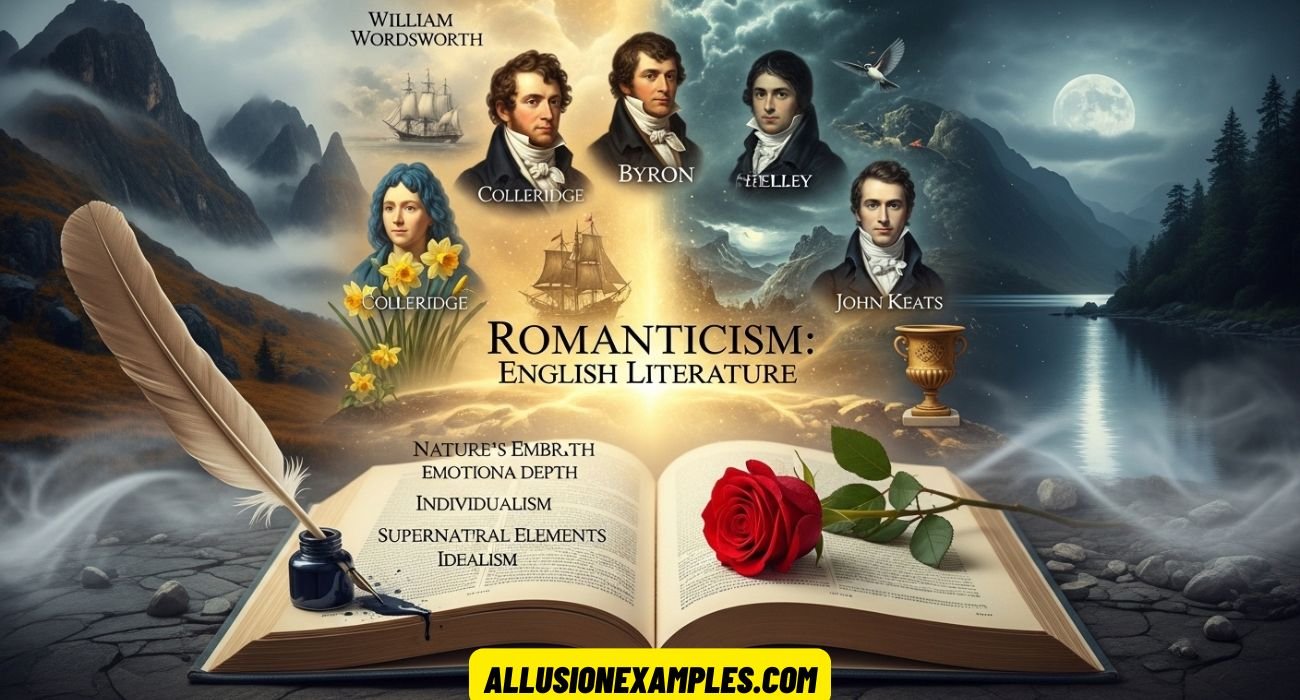
The Romantic Poets were writers who shaped the Romantic Age Literature. These writers focused on imagination, emotion, and nature. The most important poets included William Wordsworth Romanticism, Samuel Taylor Coleridge Romanticism, John Keats Romantic poetry, Percy Bysshe Shelley Romanticism, Lord Byron Romanticism, and William Blake Romanticism.
These poets introduced new literary ideas and created unique styles. Their works reflected Romantic literature themes such as nature, individuality, and emotion.
Major Romantic Poets and Their Contributions
| Poet | Contribution | Major Theme |
| William Wordsworth | Nature poetry | Individualism |
| Samuel Taylor Coleridge | Supernatural poetry | Imagination |
| John Keats | Sensory imagery | Beauty and mortality |
| Percy Shelley | Revolutionary poetry | Freedom |
| Lord Byron | Byronic hero | Rebellion |
| William Blake | Mystical poetry | Spirituality |
The Romantic poets and their works changed literature forever. Their influence can still be seen today.
Themes and Characteristics of English Literature
The Themes of Romanticism focus on emotion, imagination, and individuality. These themes appear across Romantic Poetry and Romantic Era Literature.
The most common Romantic period characteristics include Individualism in Romanticism, Emotion in Romantic literature, Imagination in Romantic poetry, and Subjectivity in Romanticism. Writers explored personal experiences and emotions instead of following traditional rules.
Romantic writers emphasized Symbolism in Romantic literature and Imagery in Romantic poetry. These techniques helped readers experience emotions deeply.
Characteristics of the Romantic Period
The Characteristics of Romanticism shaped the Romantic Movement. These features defined the Romantic Age Literature and influenced modern writing.
The six major Romantic period characteristics include nature, individuality, melancholy, common people, idealized women, and personification.
Celebration of nature
Nature in Romantic poetry is one of the most important features of Romanticism in English Literature. Romantic writers believed nature was a source of inspiration and healing.
Wordsworth nature poetry shows how nature connects to human emotions. William Wordsworth Romanticism focused on landscapes, mountains, and rivers. His work emphasized Emotional expression Romantic poetry.
Percy Bysshe Shelley Romanticism also used nature as a powerful force. Shelley revolutionary poetry often described wind, storms, and natural energy.
John Keats Romantic poetry celebrated beauty in nature. His Keats odes explored seasons and natural beauty.
The Sublime in Romantic literature refers to powerful and overwhelming nature scenes. These scenes created awe and emotional impact.
Celebration of isolation and melancholy
Isolation in Romanticism and Melancholy in Romanticism are key themes in Romantic Era Literature. Romantic writers believed sadness and loneliness inspired creativity.
Romantic poets often explored emotional struggles. Emotional expression Romantic poetry helped writers express feelings of loneliness.
Samuel Taylor Coleridge Romanticism explored sadness deeply. His Coleridge supernatural poetry often included mysterious and emotional elements.
John Keats Romantic poetry also explored mortality and sadness. His poetry captured emotional depth.
Interest in the common man
The Common man in Romantic poetry became an important theme in Romanticism in English Literature. Writers focused on everyday people instead of kings and nobles.
William Wordsworth Romanticism emphasized simple language. He believed poetry should reflect real life.
This shift made Romantic Poetry accessible to everyone. Writers used Subjectivity in Romanticism to express personal experiences.
Idealization of women
The Idealization of women Romanticism appeared frequently in Romantic Age Literature. Women were portrayed as symbols of beauty and purity.
Lord Byron Romanticism often described women as mysterious figures. The Byron Byronic hero often interacted with idealized female characters.
John Keats Romantic poetry also idealized women in dreamlike settings.
Personification and pathetic fallacy
Personification in Romantic poetry and Pathetic fallacy examples are major literary techniques in Romanticism in English Literature.
Writers gave nature human emotions. This technique helped express feelings.
Symbolism in Romantic literature also appeared frequently. Writers used nature to represent emotions.
See Also : 80+ Powerful Ways to Say “I Agree with You”
English Language through Romantic Books
Reading Romantic Era Literature helps improve English skills. These books offer rich vocabulary and emotional depth.
| Book | Author | Benefit |
| Pride and Prejudice | Jane Austen | Formal English |
| Frankenstein | Mary Shelley | Vocabulary |
| The Prelude | Wordsworth | Poetic language |
These works help readers understand Romanticism in English Literature while improving language skills.
Legacy of Romanticism in English Literature
The Romanticism literary movement influenced modern literature, film, and art. The Romantic Movement introduced creativity and individuality.
Modern writers still follow Romantic literature themes such as emotion and imagination. The Romantic Poets shaped storytelling forever.
The Rise of Romanticism in English Literature
Romanticism in English Literature emerged during the late eighteenth century as writers began to challenge traditional literary rules. The Romantic Movement developed as a reaction against rational thinking and industrial growth. Writers turned toward imagination, emotional experience, and personal freedom. This shift helped create a new literary voice that valued creativity and subjective interpretation.
The Romantic Period in English Literature was shaped by historical changes such as the Industrial Revolution and political revolutions. These events influenced writers to question authority and celebrate individual expression. Romantic poets focused on emotional depth, personal reflection, and spiritual exploration, creating literature that connected deeply with readers and influenced generations.
The Importance of Emotion in Romantic Poetry
Emotion in Romantic literature played a central role in shaping poetic expression. Romantic poets believed that feelings were more important than logic. Writers explored joy, sadness, love, and fear in their works. This emotional depth helped readers connect with literature on a personal level and made Romantic poetry powerful and memorable.
Romantic poets such as Wordsworth and Keats used emotional expression to describe human experience. They believed poetry should come from genuine feelings. Their work reflected personal struggles, dreams, and hopes. This emphasis on emotion helped transform literature and made Romanticism one of the most influential movements.
Nature as a Source of Inspiration
Nature in Romantic poetry became a major theme during the Romantic Age Literature. Writers believed nature offered peace, healing, and spiritual guidance. Romantic poets described mountains, rivers, and landscapes in vivid detail. These descriptions helped readers visualize nature and experience emotional connections.
William Wordsworth Romanticism emphasized nature’s beauty and spiritual power. Percy Bysshe Shelley Romanticism also portrayed nature as powerful and transformative. Romantic poets used nature to explore emotions and human experience. Their work encouraged appreciation for nature and inspired environmental awareness.
Individualism in Romanticism
Individualism in Romanticism emphasized personal freedom and self-expression. Romantic writers rejected social expectations and explored personal identity. They believed each person’s experience was unique. This idea encouraged creativity and independence among writers and readers.
Romantic poets valued imagination and personal insight. They explored inner thoughts and emotions. This focus helped create meaningful literature that reflected individual experiences. Romantic writers influenced modern ideas about creativity, self-expression, and personal freedom.
Melancholy and Isolation in Romantic Literature
Melancholy in Romanticism became a powerful theme in Romantic Era Literature. Writers explored loneliness, sadness, and longing. They believed these emotions inspired creativity. Romantic poets often described emotional struggles and inner conflict.
Isolation in Romanticism reflected writers’ feelings of separation from society. Romantic poets expressed sadness and hope simultaneously. This emotional complexity made Romantic poetry meaningful. Their work influenced modern literature and emotional storytelling.
The Role of Imagination in Romantic Poetry
Imagination in Romantic poetry allowed writers to explore new ideas and emotions. Romantic poets believed imagination revealed deeper truths. They used creative language and symbolic imagery to express complex thoughts.
Romantic writers such as Blake used mystical and imaginative themes. William Blake Romanticism explored spirituality and symbolism. Imagination helped Romantic poets create vivid and meaningful works that inspired readers.
The Common Man in Romantic Literature
The common man in Romantic poetry became an important subject during Romanticism in English Literature. Writers focused on ordinary people and rural life. This approach made literature more relatable.
William Wordsworth Romanticism emphasized simple language and everyday experiences. Romantic poets celebrated human dignity and emotional depth. Their work helped broaden literature’s audience and influence.
Idealization of Women in Romanticism
Idealization of women Romanticism portrayed women as symbols of beauty and purity. Romantic poets often described women in spiritual and emotional terms. This portrayal reflected Romantic ideals.
Lord Byron Romanticism often depicted women in mysterious ways. John Keats Romantic poetry also idealized female figures. These portrayals influenced Romantic storytelling and themes.
See Also : Positive Descriptive Words: Powerful Adjectives to Describe A Person (A-Z Guide)
Personification and Pathetic Fallacy
Personification in Romantic poetry gave nature human emotions. Romantic poets used this technique to express feelings. Nature became a reflection of human experience.
Pathetic fallacy examples appear throughout Romantic literature. Writers used weather and landscapes to represent emotions. This technique helped create emotional depth and symbolism.
The Lasting Legacy of Romanticism
The Romanticism literary movement influenced modern literature and art. Romantic poets shaped storytelling and creative expression. Their ideas remain relevant today.
Romantic Age Literature introduced emotion, imagination, and individuality. These ideas continue to inspire writers and readers. Romanticism remains one of the most important literary movements.
FAQs
What are the themes of Romanticism?
The main themes of Romanticism in English Literature include nature, emotion, imagination, individualism, spirituality, and the sublime.
Romantic writers focused on personal feelings, freedom, beauty, and the relationship between humans and nature.
What are the 5 characteristics of Romanticism?
The five characteristics of Romanticism are celebration of nature, focus on individualism, emotional expression, imagination, and interest in the common man.
These features shaped Romantic Poetry and emphasized creativity, freedom, and personal experience.
What are the 5 ideals of Romanticism?
The five ideals of Romanticism include individual freedom, emotional depth, imagination, appreciation of nature, and spiritual exploration.
Romantic poets believed these ideals helped reveal truth beyond logic and reason.
What are the 8 elements of Romanticism?
The eight elements of Romanticism are nature, imagination, emotion, individualism, the sublime, isolation, spirituality, and fascination with the past.
These elements defined Romantic Era Literature and influenced modern literary expression.
Conclusion
Romanticism in English Themes shows how writers valued nature, emotion, and imagination. Romantic poets focused on human feelings and personal experiences. They described beauty in nature and celebrated freedom and creativity. Writers like Wordsworth, Keats, Shelley, and Byron shaped the Romantic period with their powerful ideas. Their works helped readers understand emotions, dreams, and individuality in a simple and meaningful way.
The influence of Romanticism in English Themes still appears in modern literature and poetry today. Writers continue to explore nature, imagination, and human emotion. Romantic literature teaches readers to appreciate beauty and think creatively. These ideas help students understand literature easily and improve their reading skills. Romanticism remains an important part of English literature and continues to inspire readers across the world.