70+ Common Symbols in Literature: Unlock Hidden Meanings (Amazing Guide)
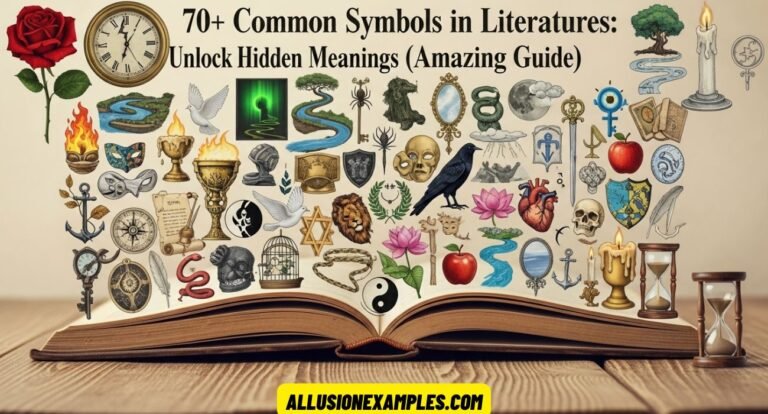
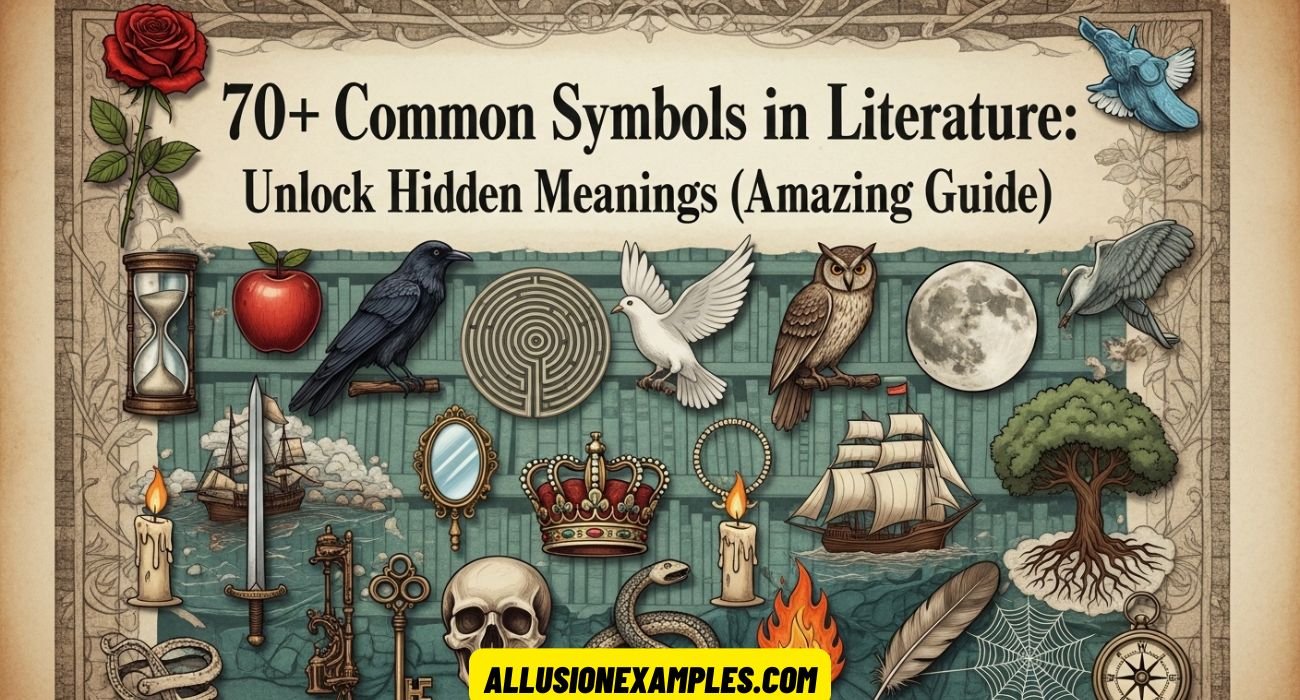
Symbols in literature are objects, colors, characters, or events with deeper meanings. Writers use them to share ideas without long explanations. Common Symbols in Literature help readers understand feelings, themes, and messages in stories.
Rain often appears during sad scenes in stories and movies. A dark sky may show fear or trouble ahead. These small details make readers curious about Common Symbols in Literature.
Many writers use nature, animals, colors, and objects as symbols. These Common Symbols in Literature add meaning and make stories more powerful. Learning them helps readers understand stories in a simple way.
What Are Common Symbols in Literature?
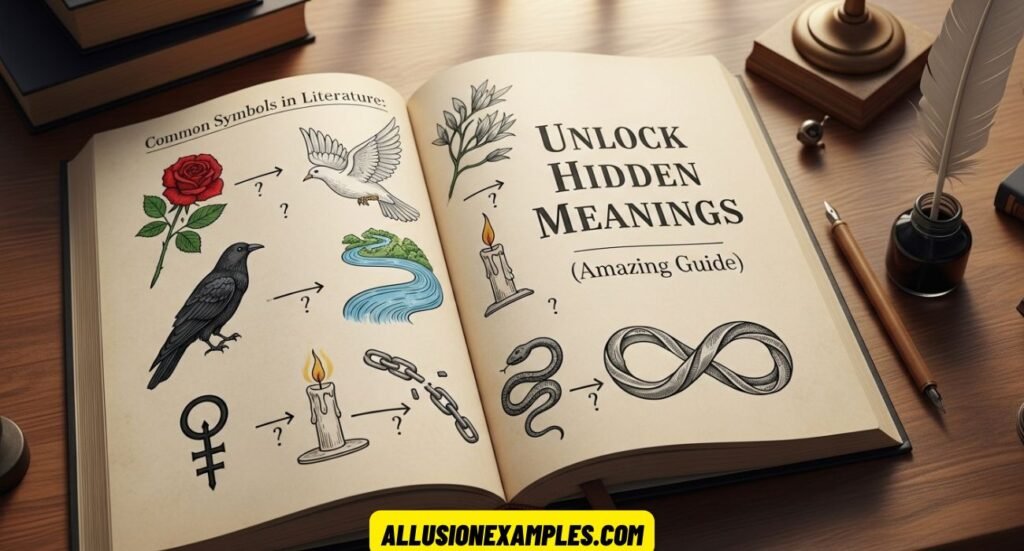
Common symbols in literature are objects, characters, settings, or actions that represent deeper meanings beyond their literal sense. Writers use symbolism definition and examples to convey emotions, ideas, and themes without directly stating them. This technique is one of the most powerful literary devices symbolism used in storytelling.
When you study symbolism in English literature, you discover that symbols help connect readers to universal experiences. For example, darkness often represents fear or uncertainty, while light symbolizes hope and knowledge. These examples demonstrate how symbolic meaning in literature works across different cultures and time periods.
The concept of types of symbolism in literature includes universal symbolism, cultural symbolism, contextual symbolism, and personal symbolism. Universal symbols are understood by most readers, such as water representing life. Cultural symbols depend on tradition, such as white symbolizing purity in Western culture. Contextual symbols depend on the story, while personal symbols are created by individual authors.
The table below explains common types of symbolism:
| Type of Symbolism | Description | Example |
| Universal Symbolism | Widely understood symbols | Rain representing sadness |
| Cultural Symbolism | Culture-based meaning | White representing purity |
| Contextual Symbolism | Story-specific meaning | A broken watch symbolizing lost time |
| Personal Symbolism | Author-created meaning | A unique object used repeatedly |
Understanding symbolism in storytelling helps readers identify deeper themes in literature. It also improves symbolism in fiction writing, allowing writers to create more meaningful stories.
Nature and Weather: Common Symbols in Literature
Nature plays a major role in nature symbolism in literature because it reflects human emotions. Writers often use weather, landscapes, and seasons to mirror a character’s mood. This is one of the most common symbolism techniques in literature.
In symbolism in modern literature and symbolism in classic literature, nature frequently appears during emotional turning points. For example, storms appear during conflicts, while sunshine appears after resolution. This technique helps readers understand emotional shifts without direct explanation.
Nature symbols are common in symbolism in novels and stories because they create emotional atmosphere. This approach is also widely used in symbolism in poetry and prose, making nature one of the most effective storytelling tools.
Weather and Celestial Symbols
Weather symbolism in literature is widely used because weather naturally reflects mood. Authors often connect emotional events with natural elements such as rain, storms, or sunlight.
The table below shows common symbols in literature examples using weather and celestial elements:
| Symbol | Meaning | Example |
| Rain | Sadness, cleansing | A character walks in rain after loss |
| Storm | Conflict | Thunder during argument |
| Fog | Confusion | Character lost in fog |
| Sun | Hope | Sunrise after victory |
| Moon | Change | Full moon transformation |
| Stars | Destiny | Lovers watching stars |
| Snow | Purity or death | Snow covering battlefield |
| Wind | Change | Sudden wind before decision |
| Rainbow | Hope | Rainbow after struggle |
| Lightning | Realization | Idea during lightning |
| Sunrise | New beginning | Start of new life |
| Sunset | Ending | Final goodbye |
| Clouds | Uncertainty | Dark clouds gathering |
| Night | Fear | Night before danger |
| Daylight | Truth | Truth revealed in daylight |
These examples demonstrate symbolism examples in literature and show how symbolism in English writing adds emotional depth.
Plant and Landscape Symbols
Plants and landscapes are widely used in symbolism in literature examples list. These elements often represent growth, obstacles, and transformation. In symbolism in fiction examples, landscapes frequently reflect a character’s journey.
The table below shows common plant and landscape symbols:
| Symbol | Meaning |
| Forest | Danger, self-discovery |
| Garden | Growth, paradise |
| Mountain | Challenge |
| River | Journey |
| Desert | Isolation |
| Rose | Love and pain |
| Tree | Life and wisdom |
| Ocean | Mystery |
| Fire | Passion |
| Weeds | Neglect |
| Path | Life journey |
| Island | Loneliness |
| Valley | Peace |
| Cliff | Risk |
| Meadow | Happiness |
These symbolism meanings list examples show how symbolism in storytelling examples work in literature.
Animals: Common Symbols in Literature
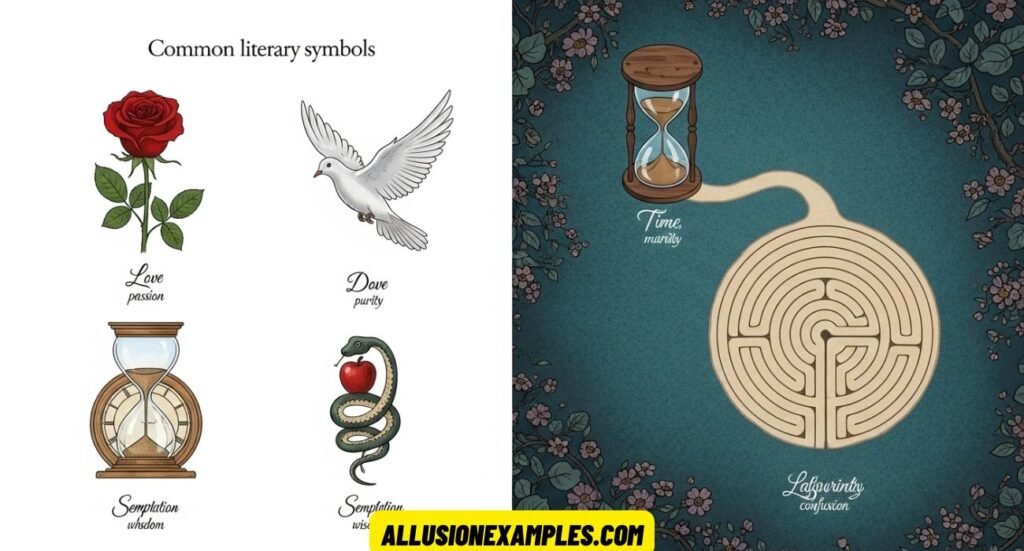
Animal symbolism in literature is one of the oldest storytelling traditions. Writers use animals to represent personality traits and emotions. These symbolic animals in literature appear frequently in symbolism in novels examples.
The table below shows common animal symbols:
| Animal | Meaning |
| Lion | Courage |
| Snake | Betrayal |
| Dove | Peace |
| Raven | Death |
| Owl | Wisdom |
| Lamb | Innocence |
| Wolf | Cruelty |
| Butterfly | Transformation |
| Dog | Loyalty |
| Eagle | Freedom |
| Rat | Betrayal |
| Spider | Manipulation |
| Fox | Cunning |
| Bear | Strength |
| Horse | Power |
These examples highlight literary symbols meanings and demonstrate figurative language symbolism.
Colors: Common Symbols in Literature
Color symbolism in literature is powerful because colors create immediate emotional reactions. In symbolism in stories examples, colors help establish mood and theme.
| Color | Meaning |
| Red | Passion |
| White | Purity |
| Black | Death |
| Green | Envy |
| Blue | Sadness |
| Yellow | Fear |
| Purple | Royalty |
| Gold | Wealth |
| Gray | Depression |
| Pink | Love |
These examples help readers understand symbolism meaning in English.
Objects and Settings: Common Symbols in Literature
Object symbolism in literature focuses on everyday items that represent deeper ideas. These symbolic objects in literature are commonly used in symbolism examples in books.
| Object | Meaning |
| Mirror | Truth |
| Clock | Time |
| Key | Freedom |
| Mask | Deception |
| Road | Journey |
| Window | Freedom |
| Door | Opportunity |
| Skull | Death |
| Chain | Imprisonment |
| Ring | Unity |
| Ladder | Ambition |
| Book | Knowledge |
These literary symbols examples list highlight how objects gain deeper meaning.
Why Do Authors Use Common Symbols in Literature?
Authors use symbolism in literature to create layered storytelling. Instead of directly stating emotions, they use symbols to communicate ideas indirectly. This technique improves symbolism in fiction writing and helps readers connect emotionally.
In American literature, symbolism appears in works like The Great Gatsby and To Kill a Mockingbird. These examples demonstrate symbolism examples in novels and highlight the importance of symbolism.
See Also : Anaphora Examples: 70+ Powerful Anaphora Examples in English Writing
How to Identify Common Symbols in Literature
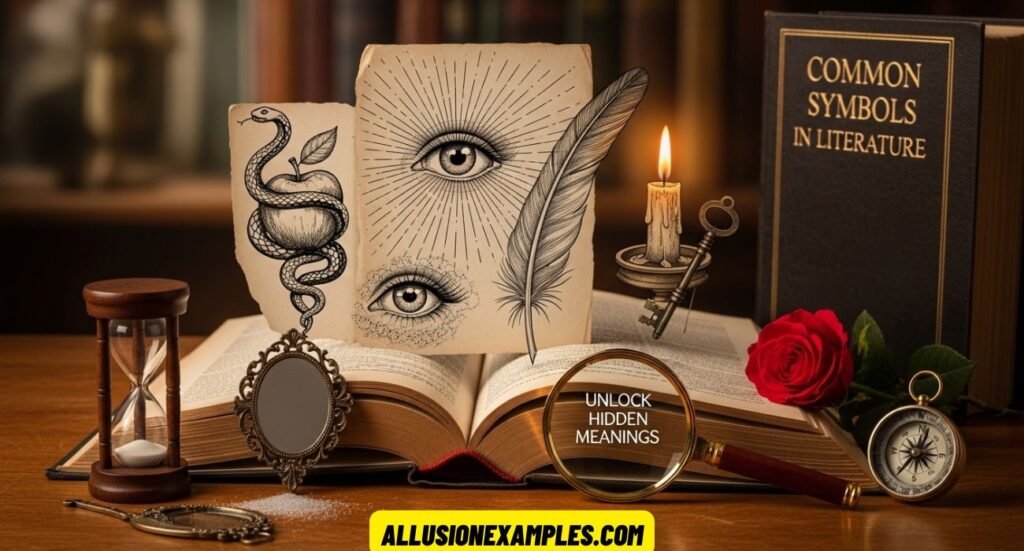
Identifying common symbols in literature requires practice. Readers should look for repeated objects, unusual descriptions, and emotional moments. These techniques help improve symbolism analysis in literature.
Understanding literary symbolism explained allows readers to interpret deeper meanings. When you recognize patterns, you begin to understand how authors communicate themes.
The Power of Symbolism in Literature
Symbolism in literature helps writers communicate deep emotions and complex ideas without explaining everything directly. Many authors rely on common symbols in literature to add hidden meanings to their stories. This technique makes readers think critically and explore deeper themes beyond the surface narrative.
When readers understand symbolism in literature, they begin to notice how small details carry powerful meanings. A simple object like a candle can represent hope, while darkness may symbolize fear. These literary symbols and meanings create emotional connections and make stories more memorable and impactful.
How Symbolism Enhances Storytelling
Writers use symbolism in storytelling to make their narratives more meaningful and layered. Instead of directly stating emotions, they use common literary symbols to suggest feelings indirectly. This method creates suspense, emotional depth, and reader engagement throughout the story.
Understanding symbolism examples in literature helps readers analyze characters and themes more effectively. When a character walks through a storm, it often reflects inner conflict. These symbolism examples in novels show how authors use natural elements to strengthen storytelling.
Universal Symbols in Literature
Universal symbols appear in stories across cultures and time periods. These types of symbolism in literature include nature, animals, colors, and objects. For example, water often represents life, while fire symbolizes destruction or passion. These symbols help readers easily understand deeper meanings.
Understanding universal symbols improves symbolism analysis in literature. When readers recognize recurring patterns, they gain insight into the author’s message. These symbolism in English literature examples appear in classic and modern stories, making them essential for literary understanding.
Symbolism in Classic Literature
Classic literature frequently uses symbolism in classic literature to express moral lessons and societal themes. Famous novels often contain symbolism in novels and stories that reflect cultural values and human struggles. These symbols help readers understand deeper meanings within historical contexts.
For example, in many classic novels, journeys represent personal growth. These symbolism examples in books highlight transformation and self-discovery. Recognizing these patterns helps readers appreciate classic literature and understand symbolism meaning in English more effectively.
Symbolism in Modern Literature
Modern writers use symbolism in modern literature to explore psychological themes and social issues. Unlike classic literature, modern symbolism often appears subtle and complex. Readers must pay attention to repeated elements and patterns to understand the symbolic meaning in literature.
Modern authors frequently use symbolism in fiction examples to represent identity, relationships, and conflict. For instance, broken objects may symbolize emotional damage. These literary symbolism explained techniques help readers interpret deeper meanings in contemporary stories.
Animal Symbolism in Literature
Animal symbolism in literature helps writers quickly describe character traits. A lion often represents courage, while a snake symbolizes betrayal. These symbolic animals in literature allow readers to understand personalities without lengthy explanations.
Writers use animals in symbolism in storytelling examples to create emotional connections. These literary symbols meanings appear in fables, novels, and poetry. Understanding animal symbolism helps readers recognize hidden meanings and improve interpretation skills.
Color Symbolism in Literature
Color symbolism in literature creates emotional atmosphere in stories. Red often represents passion or danger, while blue suggests calmness or sadness. These common literary devices symbolism help writers set tone and mood effectively.
Understanding colors improves symbolism in English writing. Authors frequently use colors to reflect character emotions or themes. These symbolism examples for students help readers recognize deeper meanings and interpret literary works more accurately.
Nature Symbolism in Literature
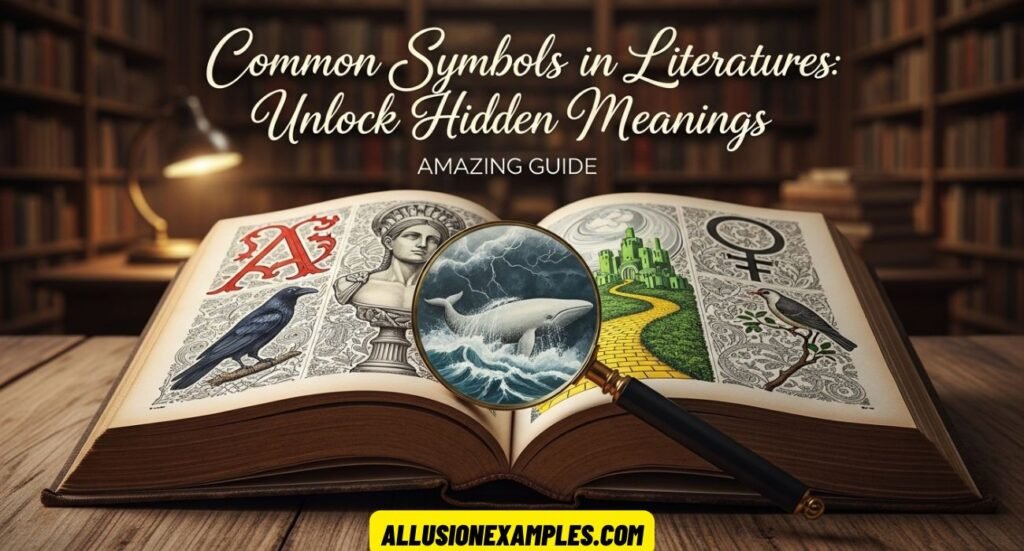
Nature symbolism in literature reflects human emotions and experiences. Writers often use weather and landscapes to represent feelings. For example, storms may symbolize conflict, while sunshine represents hope and happiness.
These symbolism in literature examples list show how nature mirrors character emotions. Understanding weather symbolism in literature helps readers recognize emotional shifts. Nature symbolism adds realism and depth to storytelling.
Object Symbolism in Literature
Object symbolism in literature gives everyday items deeper meaning. A mirror may symbolize truth, while a key represents opportunity. These symbolic objects in literature appear frequently in novels and short stories.
Recognizing object symbolism improves symbolism techniques in literature. Authors use repeated objects to emphasize themes. These literary symbolism for beginners help readers understand deeper meanings and interpret stories more effectively.
See Also : Romanticism in English Literature: Key Themes, Poets, and Legacy
Why Symbolism Matters in Literature
Symbolism adds depth and meaning to storytelling. Without symbolism in literature, stories would feel simple and less engaging. Writers use figurative language symbolism to create layered narratives and emotional impact.
Understanding symbolism improves reading comprehension and critical thinking. These symbolism in storytelling techniques help readers analyze themes and characters. Learning common symbols in literature enhances both reading and writing skills.
FAQs
What are symbols in literature?
Symbols in literature are objects, characters, colors, or events that represent deeper meanings beyond their literal sense. Authors use them to express themes, emotions, and ideas indirectly.
What does 10 symbolize in literature?
The number 10 often symbolizes completeness, perfection, or divine order in literature. It can also represent a full cycle or totality in storytelling.
What are the 20 examples of symbolism?
Common examples include rain, storm, sun, moon, river, road, mirror, key, rose, fire, water, forest, mountain, dove, snake, lion, red color, white color, clock, and door.
What are the 8 visual symbols?
Common visual symbols include heart for love, dove for peace, skull for death, crown for power, ladder for growth, mirror for truth, chain for restriction, and light for hope.
Conclusion
Understanding Common Symbols in Literature helps readers see deeper meaning in stories. Writers use symbols to share ideas, feelings, and themes in a simple way. A storm can show conflict, while sunshine can show hope and happiness. These symbols make stories more interesting and meaningful. When students learn these symbols, they read with more attention and understanding. This knowledge also improves writing skills and helps students explain ideas clearly.
Learning Common Symbols in Literature also builds strong reading habits. Students start to notice colors, animals, weather, and objects in stories. These details often carry hidden meanings. With practice, readers understand stories more deeply and enjoy reading more. This skill helps in school, exams, and everyday reading. Strong knowledge of symbolism also helps students become confident readers and writers.