Anaphora Examples: 70+ Powerful Anaphora Examples in English Writing
Anaphora Examples show repetition at the beginning of sentences or phrases. This technique creates rhythm and emphasis in writing. Writers use anaphora to make ideas clear and memorable.
You hear this technique in famous speeches and popular songs. You read it in poems, stories, and everyday writing. This simple repetition makes words sound strong and powerful.
Anaphora Examples help students improve writing and speaking skills. Writers use this method to highlight important ideas. Learning anaphora makes English writing easier and more effective.
What is Anaphora? (Definition and Explanation)
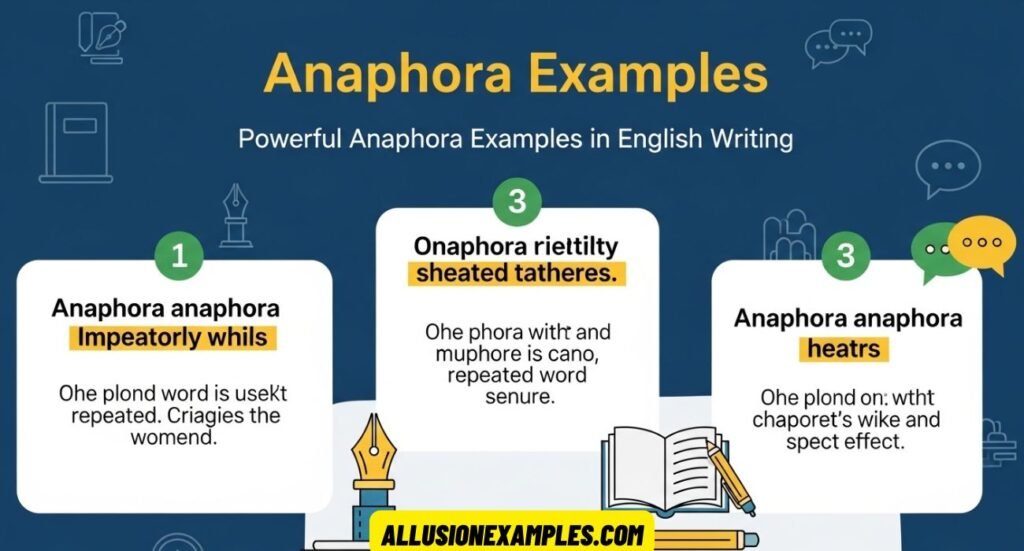
What is anaphora? Anaphora is a rhetorical device in English writing that repeats a word or phrase at the beginning of consecutive sentences or clauses. This repetition for emphasis helps create rhythm and emotional impact.
Here is a simple example of examples of repetition in writing:
“I will study today. I will study tomorrow. I will study until I succeed.”
This example shows repetition at beginning of sentences, which makes it an effective figure of speech examples.
Anaphora is one of the most powerful literary devices in English and appears frequently in speeches, poems, and storytelling. It is often included in rhetorical devices list alongside parallelism examples, epistrophe examples, and other repetition examples.
Where Are Anaphora Examples Commonly Used?
Anaphora examples appear in many types of writing. Writers use them in storytelling, speeches, songs, and advertisements. These figures of speech in English are especially effective in persuasive and emotional writing.
You will commonly see anaphora in literature, speeches, music, and even marketing campaigns. American politicians, motivational speakers, and content writers often use this rhetorical repetition technique to strengthen their message.
The use of anaphora in English is especially common in modern English composition techniques and speech writing techniques. This technique also appears in English language learning writing and helps beginners improve clarity and rhythm.
Anaphora Examples in Literature
Anaphora examples in literature are common in classic novels, poetry, and modern storytelling. Writers use anaphora in literature to emphasize emotions, create rhythm, and strengthen themes.
One famous example comes from Charles Dickens:
“It was the best of times, it was the worst of times…”
This is one of the most famous anaphora examples in English literature.
Another example from Maya Angelou:
“You may shoot me with your words,
You may cut me with your eyes,
You may kill me with your hatefulness…”
This demonstrates anaphora in poetry and shows how repetition strengthens emotional impact. These examples are also part of poetic devices examples used in literature classes across the United States.
Writers use creative writing devices like anaphora to improve storytelling and character voice. This technique is also included in many literary devices examples taught in schools.
Why do writers use anaphora?
Writers use anaphora examples to emphasize ideas, create rhythm, and improve readability. This repetition for emphasis helps readers remember important points.
The main reasons writers use rhetorical devices examples like anaphora include emotional impact, clarity, persuasion, and memorability. These English writing techniques are widely used in essays, speeches, and storytelling.
Anaphora also helps improve English writing skills and makes content more engaging. Many educators recommend using writing for beginners strategies that include repetition and rhythm.
Anaphora in modern writing
Anaphora in English is not limited to classic literature. Today, bloggers, marketers, and social media creators use this rhetorical repetition technique in modern writing.
For example, marketing copy often uses repetition:
“Buy now. Buy smart. Buy better.”
This is a modern example of creative writing techniques used in advertising. It also demonstrates persuasive writing techniques commonly used in digital marketing.
Modern writers use creative writing devices to improve writing skills and create engaging content. This makes anaphora a valuable tool in blogs, speeches, and social media.
Anaphora Examples in Speeches and Rhetoric
Anaphora examples in speeches are some of the most powerful uses of repetition. American leaders often use this technique.
Martin Luther King Jr.:
“I have a dream…”
“I have a dream…”
“I have a dream…”
This is one of the most famous anaphora examples in speeches and one of the most recognized famous speech techniques in U.S. history.
Another example from Winston Churchill:
“We shall fight on the beaches…
We shall fight on the landing grounds…”
These examples demonstrate persuasive speech techniques and speech writing techniques used by influential leaders.
Why do speakers use anaphora?
Speakers use anaphora examples to create rhythm and make speeches memorable. This rhetorical device in English writing helps audiences remember key ideas.
The use of repetition strengthens persuasion and improves audience engagement. Many motivational speakers use creative writing techniques and English composition techniques to enhance speeches.
Anaphora Examples in Media and Pop Culture
Anaphora in songs is common in modern music. For example:
“Let it be, let it be, let it be…”
This repetition makes songs memorable. These examples demonstrate how repetition in writing works in music.
Movies and advertisements also use creative writing devices and rhetorical repetition technique to create memorable slogans.
Powerful Anaphora Examples from Literature, Speech, and Everyday Usage
Anaphora examples appear in literature, speeches, and everyday communication. Writers use this repetition in writing to create rhythm, clarity, and emotional impact. Below are 30+ powerful anaphora examples organized into literature, speeches, and everyday usage to help you understand how this rhetorical device anaphora works in real writing.
Literary Anaphora Examples
Anaphora examples in literature show how authors use repetition to strengthen meaning and create rhythm. These literary devices examples often appear in novels, poems, and classic texts.
| Anaphora Example | Source |
| “Nevermore, nevermore” | Edgar Allan Poe |
| “I have known rivers” | Langston Hughes |
| “You may kill me” | Maya Angelou |
| “Doubt thou the stars” | Shakespeare |
| “Some feel rain” | Joanna Klink |
| “We lived in the blank spaces” | Margaret Atwood |
| “It was the best of times” | Charles Dickens |
| “So let freedom ring” | American literature tradition |
| “And miles to go” | Robert Frost |
| “Still I rise” | Maya Angelou |
| “I remember, I remember” | Thomas Hood |
| “Because I could not stop” | Emily Dickinson |
These anaphora examples in literature help create rhythm and emotion. Many authors use anaphora in poetry as part of poetic devices examples to make their writing memorable and meaningful.
Rhetorical and Speech Anaphora Examples
Anaphora examples in speeches are powerful tools for persuasion. Many famous leaders use this rhetorical repetition technique to emphasize important ideas.
| Anaphora Example | Speaker |
| “I have a dream” | Martin Luther King Jr. |
| “We shall fight” | Winston Churchill |
| “We cannot dedicate” | Abraham Lincoln |
| “What we need” | John F. Kennedy |
| “Yes we can” | Barack Obama |
| “We will rise” | Amanda Gorman |
| “Let us begin” | Ronald Reagan |
| “We will rebuild” | George Bush |
| “I warn you” | Neil Kinnock |
| “We choose to go” | John F. Kennedy |
| “Freedom now” | Civil rights speeches |
| “We the people” | U.S. speeches |
These famous speech techniques help speakers connect with audiences. Anaphora in speeches improves rhythm and clarity while strengthening persuasive speech techniques.
Everyday or Creative Anaphora Examples
Anaphora examples also appear in everyday communication and creative writing techniques. These examples show how repetition improves clarity and emphasis.
| Anaphora Example | Type |
| “I am strong, I am brave, I am ready” | Motivational |
| “We will win, we will succeed” | Inspirational |
| “Every day, every night” | Everyday speech |
| “Love conquers all, love heals all” | Creative |
| “Time heals, time teaches” | Inspirational |
| “Never give up, never surrender” | Motivational |
| “Work hard, work smart” | Advice |
| “Stay focused, stay calm” | Self-help |
| “No fear, no limits” | Motivational |
| “Dream big, dream bold” | Inspirational |
| “Start now, start strong” | Encouragement |
| “Learn today, lead tomorrow” | Educational |
These examples of repetition in writing show how anaphora in English improves clarity and emotional tone. Writers often use these creative writing devices to improve English writing style.
See Also : Romanticism in English Literature: Key Themes, Poets, and Legacy
How to Practice Using Anaphora Correctly
Learning what is anaphora becomes easier with practice. Start by reading anaphora examples in books, speeches, and poems. Notice how writers use repetition at beginning of sentences to create rhythm and emphasis. This method helps you understand how figures of speech in English work in real writing.
Practice writing your own sentences using simple repetition. Focus on clear and short phrases. Use this English writing techniques approach to build confidence. With regular practice, you improve English writing skills and develop strong creative writing techniques.
Do’s and Don’ts of Using Anaphora in Writing
Using anaphora correctly improves clarity, rhythm, and emotional impact in writing.
However, using it incorrectly can make writing repetitive and less effective.
Do: Use Anaphora for Emphasis
Use anaphora to highlight important ideas and create strong emotional impact.
Repetition for emphasis helps readers remember key messages easily.
Do: Use Anaphora in Creative and Persuasive Writing
Anaphora works well in storytelling, speeches, and persuasive content.
These persuasive writing techniques help make writing more powerful and engaging.
Do: Keep the Repetition Simple
Short and simple repetition improves rhythm and readability.
Clear phrases help readers understand ideas without confusion.
Don’t: Overuse Anaphora
Too much repetition can make writing feel forced and boring.
Use anaphora carefully to maintain balance and flow.
Don’t: Use Anaphora in Highly Technical Writing
Technical writing focuses on clarity and precision rather than style.
Avoid anaphora in formal documents where direct language is more effective.
What Makes Anaphora a Powerful Writing Technique
Anaphora examples show how repeating words at the beginning of sentences creates rhythm and emphasis. This rhetorical device anaphora helps readers understand ideas more clearly. Many writers use repetition in writing to highlight emotions, strengthen meaning, and create memorable lines that stay in the reader’s mind longer.
This technique is widely used in anaphora in English writing, especially in storytelling and speeches. The repetition at beginning of sentences helps readers follow ideas easily. Writers also use this method to improve English writing skills and make their content more engaging and persuasive.
How Anaphora Improves English Writing Skills
Learning what is anaphora helps writers develop stronger writing habits. By studying anaphora examples, students understand how repetition improves flow and clarity. This technique is useful for essays, speeches, and storytelling, making it one of the most effective writing techniques for students.
Using creative writing techniques like anaphora allows writers to create emotional connections with readers. It also helps in English language learning writing because repetition reinforces ideas. Many educators recommend anaphora as a simple way to improve writing skills and build confidence in English writing.
Famous Anaphora Examples in American Speeches
Some of the most famous anaphora examples come from American speeches. Leaders often use anaphora examples in speeches to create strong emotional impact. Repetition helps audiences remember key ideas and strengthens persuasive messages.
These persuasive speech techniques are used in politics, education, and motivational speaking. Anaphora in speeches creates rhythm and confidence in delivery. Many public speakers rely on this rhetorical repetition technique to communicate clearly and influence large audiences.
Anaphora in Literature and Storytelling
Anaphora examples in literature are common in novels and poetry. Writers use anaphora in literature to emphasize themes and emotions. This technique helps readers connect with characters and understand deeper meanings.
Many literary devices examples include anaphora because it improves storytelling. Anaphora in poetry also creates rhythm and musical flow. These creative writing devices help writers build powerful narratives and memorable scenes.
The Role of Repetition in Persuasive Writing
Repetition examples are essential in persuasive writing. Writers use repetition for emphasis to strengthen arguments. This makes ideas clearer and more convincing.
Many persuasive writing techniques rely on repetition. This rhetorical device in English writing helps readers remember important points. Writers often use anaphora to create emotional appeal and increase engagement.
Anaphora in Modern Digital Writing
Today, anaphora in English appears in blogs, social media, and marketing. Writers use creative writing techniques to attract readers and improve readability.
These English writing techniques help content stand out online. Bloggers use repetition to improve engagement. This rhetorical repetition technique is widely used in digital content.
See Also : 80+ Powerful Ways to Say “I Agree with You” – Synonyms for Everyday & Formal English
Comparing Anaphora with Other Rhetorical Devices
Rhetorical devices examples include anaphora, parallelism examples, and epistrophe examples. Each device uses repetition differently. Anaphora focuses on repetition at the beginning.
Understanding figures of speech in English helps writers choose the right technique. These creative writing devices improve storytelling and persuasive writing.
Why Anaphora Works in Poetry and Songs
Anaphora in songs creates rhythm and makes lyrics memorable. Repetition helps listeners connect emotionally with music.
Poetic devices examples often include anaphora. Writers use repetition to create musical flow and emotional depth.
FAQs
What is anaphora with 5 examples?
Anaphora is a rhetorical device that repeats words at the beginning of sentences for emphasis and rhythm.
Examples include: “I will try, I will learn, I will succeed”, “We will win, we will fight”, “Every day, every night”, “No pain, no gain”, “Let freedom ring, let justice rise.”
What is an example of anaphora and repetition?
Anaphora is repetition at the beginning of sentences such as: “She ran fast. She ran far. She ran fearlessly.”
This repeated phrase shows both anaphora and repetition in writing.
What is an anaphora in a poem?
Anaphora in poetry repeats words at the beginning of lines to create rhythm and emotion.
Example: “Still I rise, Still I fight, Still I stand.”
Is “I have a dream” an anaphora?
Yes, “I have a dream” is a famous anaphora example used by Martin Luther King Jr.
The repeated phrase at the beginning of sentences creates emphasis and rhythm.
Final Thoughts
Anaphora Examples help writers make strong and clear sentences. This writing technique repeats words at the beginning of sentences to create rhythm and emphasis. Many writers use anaphora in speeches, stories, poems, and everyday writing. This technique helps readers understand ideas better and remember important points. When you study Anaphora Examples, you learn how repetition improves writing and makes messages more powerful.
You can use Anaphora Examples to improve your English writing step by step. Start with simple phrases and repeat them carefully. Keep your sentences clear and meaningful. Practice often and read famous examples from books and speeches. With regular practice, you build confidence and improve your writing skills. Anaphora helps you write stronger, clearer, and more effective sentences.